Author Archives: gabbyhayes

Baddass Beer

A recent roadtrip took me through Green River, Wyoming. I drove into Boise from Colorado the week before to deliver furniture to my daughter, and on the way home, I stopped in Green River for the night. As usual, the first thing I did after checking into my motel was look for a microbrewery.

Green River is not a big city (population is around 12,000), nor is it a hub for breweries. There is, however one new brewery in town. Baddass Brews is downtown, close to the river – the Green River I assume. The brewery was easy to find, right on the corner of Flaming Gorge Way and 1st Street East. I’m glad I found it. The place is great.

I showed up early, around 4:30. The brewery was quiet, and all seats at the bar were empty. I grabbed one and ordred a beer. There were several on tap, and I chose an English brown ale to start. It was quite good, but not as good as the conversation I had with Danielle, the owner and bartender.

Danielle.

Danielle told me about the brewery, her and her husband’s inspiration to open it, and the different events they hold in the brewery every week. She also introduced me to Jeiremy Gomez, her business partner, who operates Goats Restaurant in the back of the brewery. I was hungry and ordered three tacos. Since I was there on Taco Tuesday, the special of the day was tacos in a Fritos bag. I should have taken a picture of the tacos, but they were so good, a wolfed them down before I could take pictures.

I ordered a second and third beer – a very good Mexican lager to go with the tacos. The lager had a hint of jalapeño – not too much though – just enough. By then, the tables and seats in the brewery began to fill up. By the time I paid my bill, said goodbye, and stood up, the place was packed.

If I’m every in Green River again, I’ll be sure to visit Badass Brews. It’s definetely worth the stop.

Danielle and Jeremy.

Treasures

Prologue: We live in an over-55 community in Mesa, Arizona. The name of our park is Venture Out. There are two areas in the park containing large open-top dumsters. Residents take their trash there for removal. The areas are also where residents go to find stuff to take home.

You know what they say: One man’s trash is another man’s treasures.

This poem is about the treasures that can be found at the Venture Out (VO) malls . . .


Life is full of wondrous treasures.
Heartfelt gifts and simple pleasures.

Gifts we’ve received from those we love.
A shiny ring, a baseball glove.

Fine china from Japan.
French perfume from Iran.

German beer from Pennsylvania.
Cornish hens from Transylvania.

I have lots of things, me and my wife.
Enough things to last a life.

But I want more, I want it all.
So off I go to the V.O. Mall.

Just look on or in a bin.
To leave empty-handed is a sin.

Pull up close to the garbage bin.
Open your trunk and load stuff in.

Get there early; look around.
There’s gifts for all; look on the ground.

Once I found some good canned food.
I didn’t want to be too crude.

I took ‘bout half; I left plenty.
Who cares it expired in twenty-twenty.

PCs, printers, cords galore.
Enough to open a BestBuy Store.

My wife started to make a stink.
Till I said, “This printer has paper and ink.”

One morning I heard Sparky bark.
He wanted to visit the dog park.

I took him there; he took a pee.
We came home with a color TV.

One time I had some yard debris.
Fronds and bark from one big tree.

I loaded it in my car one day.
Off to the mall to it throw away.

I gathered it up and worked non-stop.
Over the side into the big open-top.

From in the bin I heard such dread.
I threw it on my neighbor’s head.

Times now are looking grim.
Our house is loaded to the brim.

My wife says it’s time to quit.
I know she’s right, I must admit.

“No more stuff” to her I swore.
But Sparky barked, we’re off once more.

No Fear

It was too darned cold outside for a Monday morning in April in Arizona. The mercury in the thermostat hovered around fifty-one degrees. The sun barely shone through the thick haze and the winds topped out at over forty miles per hour. It was definitely a blustery day, and Horace was glad he was indoors, drinking hot coffee.

Horace and Grant enjoyed their early morning breakfast at Frenchie’s Diner as best they could. They would rather be outside playing Pickleball or badminton, but at least they weren’t out with Henrietta and Gloria shopping. The two men found no enjoyment in walking around and waiting in stores while their wives tried on clothes, compared prices of new curtains, or talked about the many drugs they see on late-night television, knowing that they shouldn’t get any, but the commercials mention how the drugs can make life better, except for the many side-effects, like uncontrollable sneezing and flatulence, and how they should ask their doctors if the drugs are right for them. Shopping was too much of a chore for Horace and Grant, so they whiled the morning away in Frenchie’s, enjoying breakfast and coffee and talking about more pressing news of the day.

Horace glanced out the window just as a large cardboard box blew by at a rate of speed that made him think of Chuck Yeager’s first supersonic flight. He commented on the strong winds and the latest haboob that knocked over a few golf carts in the park while adding several shakes of Tabasco Sauce to his Denver omelet. Grant couldn’t help but notice all of the hot sauce Horace doused upon his eggs.

“You know, that could kill you.” Grant said.

“What?”

Grant continued. “The hot sauce. That’s what. You know it’s full of all kinds of unhealthy things, like salt and vinegar, and that’s not to mention all the preservatives and additives.”

Horace took a big bite of his omelet and agreed. “You’re right. It could kill me.”

Grant smiled and said he was just looking out for his best friend. Horace added. “If someone threw a bottle of Tabasco Sauce out of a passing plane that was flying at thirty-two thousand feet, and the bottle hit me on the noggin at nine-point-eight meters per second squared, yes, I guess it could kill me. But since we’re sitting indoors under a roof and not under any known flight paths, I’m not too scared about death by condiment.”

“So you don’t worry about dying?” Grant asked.

“Not usually, and not when I’m eating breakfast. So let me eat in peace.”

Grant pondered the situation for a minute and then added, “Me neither. I’m not scared of dying and I don’t really care. Just like the song by Blood, Sweat, and Fears.”

“Tears.” Horace commented.

“Only when I get Tabasco Sauce in my eyes.”

Horace corrected Grant. “It’s Blood, Sweat, and Tears.”

“That’s what I said. Anyway, don’t you ever fear death?” Grant inquired.

Now Horace thought for a minute or two. He replied, “I don’t really fear much. Too old for that. I mean, we’re all going to die, and I’ve lived a good, long life, so no, I don’t fear death.”

“You don’t have any fear of dying”? Grant asked again.

Now Horace became philosophical. “Fear of dying and fear of death are two different things. I’ll give you an example. If I’m pedaling down a bike path and some numbskull in a souped up, louder than a B-17 bomber, 1979 Firebird, otherwise known as a disco-sled, drives down the bike path toward me, doing eighty-nine miles per hour, of course I’ll be scared of the physical act of dying. I’d try to swerve out of the way, maybe pee my pants, and probably cuss, and yes, I’d be scared of becoming a two-hundred pound sailing soufflé as I fly over the hood of the car, but I’m not going to spend my life fearing the inevitable.”

Grant tried to contemplate what Horace said as he took a few sips of coffee. He then asked, “What about afterwards? You know; Heaven and Hell.”

“I’ve experienced both already. Heaven was the day I saw Henrietta working the lunch counter at the local Woolworths, and Hell was the day I shipped out to war. That’s good enough for me.” Horace said.

Grant agreed with Horace. He too had spent time in Vietnam, and he too had met Gloria, the love of his life.

As they worked on their breakfasts, Horace asked Grant, “What about you? What do you fear the most?”

Grant took a bite of his French toast, washed it down with a swig of coffee, and replied, “That depends on where I happen to be. When I lived in Detroit, my three biggest fears were running out of gas south of Eight Mile, driving into a pothole on I-94 and never getting out, and accidentally drinking water from Flint. When I moved to Colorado, my biggest fears were getting stuck in ski traffic of 1-70 without enough food or water to survive on for a couple of days, and getting run into by a kid in a brewery and spilling my beer.”

“What are you scared of here in Arizona?” Horace asked.

“When we moved here, I thought I’d be afraid of Gila monsters,rattlesnakes, and scorpions the size of Cuban cigars that crawl into my shoes when I’m dumb enough to leave them outside overnight. But I’ve never seen any of those. There’s only one thing here that really puts the fear of Jesus in me.”

“And what would that be?”

“Walking in a supermarket parking lot on Senior Day.”

“Amen to that.” Horace added.

They sat in silence for another couple of minutes. Just as they were finishing their meals, Alma, the waitress walked up to their table.

“Would you like anything else?” she asked.

Horace replied, “I think I left a little room for one of your hot, gooey cinnamon rolls.”

Alma shook her head and said, “Sorry. We just ran out.”

Horace looked up and grumbled, “I was afraid of that.”

Can You Hear Me?

Thomas David Jones sat in the hard fiberglass chair, surrounded by numerous instruments and controls. The tin can that housed him was smaller than the kitchen in the base housing in Florida where he and his wife lived.

Tom was a Major in the United States Air Force, and one of the first astronauts chosen by NASA for space exploration. As Tom sat strapped into the seat of the cone-shaped Mercury module, he thought about his mission, and the need for the United States to catch up and pass the Soviet Union in the so-called ‘Space Race’.

The race began in 1957, when the U.S.S.R. launched Sputnik, the county’s first satellite. In 1961, Yuri Gagarin became the first person to fly into space. Alan Shepard, an American astronaut, flew a sub-orbital flight soon after, but the U.S. had a long way to go to catch up with the Soviets. NASA formed and the race went into high gear.

The U.S. got closer when John Glenn orbited the Earth in 1962. NASA’s goals were to have the first person perform a space-walk, followed by putting the first person on the moon. NASA slated Tom for the first space-walk.

Tom woke early on Wednesday morning, April 17, 1963. His historic flight would begin in two hours. He had butterflies in his stomach, and didn’t feel like eating breakfast. Instead, he swallowed a few protein pills. At precisely 4:00 AM EST, an Air Force jeep picked him up and drove him to Cape Canaveral. He was briefed, and then led to the top of the launch pad. Launch engineers led him to the capsule and strapped him into the seat. Just before the hatch closed, Tom said a quick prayer and donned his helmet.

Through the speakers in his helmet, he heard the countdown for his historic flight. Another engineer in Ground Control counted down . . .

“Ten, Nine, Eight, Seven, Six, Five, Four, Three, Two, One, Liftoff.”

Eight minutes into his flight, the Ground Control engineer spoke to Tom again.

“Tom. You made the grade.”

Tom knew this was code for making it out of the earth’s atmosphere. Twenty minutes after that, Tom was in space, safely orbiting Earth. For the next twenty-four hours, as Tom prepared for his space-walk, he and the Ground Control engineer communicated about Tom’s health and capsule’s conditions. At one point, the engineer asked Tom, “We have a bet going on here regarding what shirt you’re wearing under your suit. I bet one hundred dollars that you’re wearing an Air Force shirt. Most think you’re wearing a NASA shirt. Which is it?”

Tom replied, “You’re all wrong. I’m wearing a Rolling Stones shirt.”

The next day, April 18, at 12:34 EST, Tom became the first American, and the second person, to exit a spacecraft and walk in space. Just prior to him exiting the module, the Ground Control engineer spoke with him.

“It’s time for you to leave the capsule, if you dare.”

Tom grabbed and pulled the lever that opened the capsule door. He replied to the engineer. “I’m stepping through the door, and floating in a most peculiar way.”

“How are your visuals?” the engineer asked.

Tom responded, “Different from an hour ago. I’m over Africa now, and the stars look very different today. The world looks very blue.”

Tom’s space-walk was supposed to last only twenty minutes. Catastrophe struck at the nine-minute mark.

“Tom to Ground Control. I’m untethered from the capsule. It’s moving away from me, but I’m feeling very still.”

“Ground Control to Tom. Your circuit is dead, and there’s something wrong. Can you hear me?”

Tom did not respond right away.

“Can you hear me?” the engineer asked, several more times.

Tom could do nothing but float away into space. The last messages from Tom were faint and distant.

“It looks like I’m past one hundred thousand miles from Earth. I’m far above the moon now.”

“Please repeat.” The engineer asked Tom.

Tom’s last transmission came at 1:20 PM EST. “Tell my wife I love her very much.”


On June 3, 1965, Air Force Lieutenant Colonel Edward White became the first American to walk successfully in space. His time outside of the Gemini capsule lasted twenty-three minutes.

Before the Afterglow

It was a slow night at Suds. Partly this was due to the time of the year. Many of the snowbirds who came for the sunny weather were heading back to the northlands. The fact that the cable was on the fritz didn’t help. Many of the regulars who came to watch Wednesday Night Wrestling found other bars to watch the made-up mayhem that some call sport. Only seven patrons occupied the bar. Three semi-drunk local lawyers sat at the bar and discussed litigation, frustration, damnation, and titillation, all while downing draft beer. Two middle-aged women sat at a table near the front. Several large bags sat at the foot of their table, suggesting they’d been on a shopping spree. The only other people in the bar, besides Nick the bartender, were Horace and Grant, who sat at a table in the back.

Horace and Grant could usually be found at Suds on Wednesday evenings. They came to discuss the world as they knew it, while their wives, Henrietta, Horace’s wife, and Gloria, Grant’s wife, shopped, and had their hair done and nails manicured. Horace and Grant started with their first beer, and talked about the news of the day. Since they were only allowed two beers – doctor’s orders and their wives insistence – they sipped slowly, enjoying the quiet.

“Last night sure was a cluster . . . “, Grant told Horace.

“How’s that? What did you get into now?” Horace asked.

Grant told Horace about the John Denver tribute concert in their community the previous night, including the after-concert party Grant and Gloria worked. What started as a volunteer and fundraising opportunity for the basket-weaving club evolved into a Keystone Cops fiasco.

“Gloria got me involved with this after-concert dessert party. What a cluster . . . .”

“I heard you the first time, Grant. No need for cussing.”

Grant looked at Horace and replied. “If you’d have been there, you’d be cussing too. And laughing. The night was almost too bizarre to happen, but it did.”

“If you were involved, I believe it.”

Grant filled Horace in on the details.

“It went like this.”

Gloria volunteered to help serve cake and coffee after the concert Tuesday night. Of course, she volunteered me too. Dottie, the President of the basket-weaving club was in charge. Two other people were supposed to help.

We arrived at the community kitchen at 6:30, just like the e-mail from Dottie said. No one was there. We went home. Dottie called, wondering where we were. We went back to the kitchen. Dottie was there, but no one else.

Dottie took control. “First, let’s get the cake out and cut it into slices. Then we can put them on plates and back into the refrigerator until the concert is over.”

Gloria and I donned plastic gloves and headed toward the fridge. It was locked.

“Dottie.” I yelled. “I need the key.”

“The key for what?” she asked.

“The refrigerator. It’s locked.” I responded.

Dottie walked over and tried the handle on the large silver door. It was indeed locked. She walked around to the side and peered into the glass doors. You know, like the ones at the package store where the cold beer is loaded.

“WTF!” she squawked. “I don’t have the key. I’ll call security.”

A security guard arrived ten minutes later, just about the same time the other couple, Jim and Nancy came. We’d never met the security guard before. It turns out it was her first night.

“I’m new here, but maybe I can help. What’s the problem?” Catherine, the guard asked.

“We need the cake in the refrigerator, but the door is locked.” Dottie replied.

Catherine grabbed here key ring. There must have been thirty or more keys on it. She tried them all. None worked.

Dottie was starting to panic. She looked at Jim and asked, “Didn’t I send you the instructions on what to do tonight?”

Jim, an older man, with a thought-provoking look on his face replied, “Yep. I think so.”

“So what do we do now?” Dottie asked.

“Jim paused for a few seconds and replied, “Hmmmm . . . I don’t remember.”

Catherine chimed in. “Maybe I’ll call Stan, the other security guard. He’s been around awhile and knows the park better than me.”

Catherine called Stan. We all stood around for a few minutes, taking in our predicament. Dottie finally spoke. “Well, I’m not waiting around for security. I gotta get that cake.”

She opened one of the sliding glass doors, peered at the cake inside, and exclaimed, “I’ll climb through here. I think I can unlock the door from the inside.”

Before Catherine or anyone else could stop her, Dottie slid open the door, moved a few buckets of food to the side, and, headfirst, squeezed through the door. She would have made it safely too if her high-heel hadn’t of caught on the shelf. I heard a scream, and peered through the glass just in time to see Dottie hit the floor, kind of sideways, holding her right ankle. She screamed again, when a cream pie that was on a higher shelf tumbled off and hit her square in the face.

Just as Dottie was wiping pie off her face while cussing up a storm, Stan entered the kitchen. He saw and heard Dottie in the refrigerator and starting cussing up a storm of his own.

“What the Hell are you doing in there? And who let you go in there in the first place?”

Stan turned and looked at Catherine, who was trying to hide behind Jim and me.

“It happened so fast”, Catherine said. “I tried to stop her, but in she went before I could do anything.”

In the meantime, Dottie’s cussing turned to groans of agony. “I think I broke my ankle.” she exclaimed.

“Dammit! Stan yelled while he surveyed the situation. He instructed Catherine to call 9-1-1 as he moved over to the open sliding door. “Someone’s got to help her.” he said as he started his descent into the fridge.

Now Stan is no small guy. He’s at least six, two, and tips the scale around three hundred pounds. But in he went. Part ways at least. He got stuck halfway through the door. He was wedged in there like walrus jumping through a hula-hoop. He immediately started cussing again.

At that moment, Jim piped in, partially drowning out Stan’s tirade. “I think I remember where the key is. It’s in the bag of money.”

“What bag of money?” I asked. Now that Dottie and Stan were otherwise occupied, I figured I’d take charge.

“The bag of money we use for change when people want cake.” Jim answered.

“Good thinking, Jim. Do you know where the bag is?”

Jim thought again and replied, “Yep. Doris has it.”

“Who’s Doris”, I inquired.

“The vice-president. She has the money, and I’m sure the key is with it.”

“Well then, let’s call her and get her down here.” I said.

“Won’t work.” Jim replied. “I’m sure she has her phone off.”

“Why do you think that?” I asked Jim.

“Cause she’s in the concert.”

Over the moaning and cussing coming from the fridge, I decided that enough was enough. “I’m going to get the key.” I stated as I headed for the stairs leading to the concert hall on the second floor. I opened the door while the John Denver wannabe was singing about mountains and getting high, or something like that.

Interrupting John, I yelled, “Doris. We need you. Follow me and bring the money.”

Doris stood up, looking a bit embarrassed. “What’s going on?” she asked.

“We have an emergency in the kitchen. Follow me.” I looked up and added, “Is there a doctor in the house?” We have an injury that needs attention.”

“I’m a doctor.” came a voce from the stage. John Denver put down his guitar and jumped off the stage.

Doris, John, and I made it to the kitchen just as the EMT truck arrived. I got the key from the moneybag and unlocked the refrigerator door. The EMTs went inside. One tended to Dottie with John while the other EMT, with help from Catherine, Jim and me, unwedged Stan from the shelf. Stan wasn’t hurt. He was just pissed. Dottie was loaded onto a stretcher. Stan walked out of the fridge on his own. Catherine, Jim and I followed, just in time to see a throng of people standing outside of the kitchen.

“What do they want?” I asked.

Doris answered. “I guess the concert is over. They want cake.”

Gloria, who had been quiet the whole time, finally spoke. “I guess I’ll start cutting the cake.”

“I have money for change.” Doris added.

The concert moved downstairs. Someone brought John’s guitar to the kitchen. Gloria and Doris handed out cake while John sang about country roads and feather beds, or something like that. We found out later that Dottie only had an ankle sprain. Stan left with Catherine, cussing her out the whole time. That’s the end of the story.

Horace looked at Grant and asked. “Did that all really happen? I know how you like to exaggerate stories.”

“It’s all true. If you don’t believe me, ask Gloria or Stan. Or even Dottie or Doris. Just don’t ask Catherine or Jim.” he added.

“Why not them?” Horace asked.

“I think Catherine got fired. And Jim won’t remember. He barely remembers anything.”
Anywhere in Thailand

The plane landed late on a Sunday night. It was near midnight by the time I picked up my duffle bag. I scanned the arrival area of the Hat Yai airport for my name on a sign. No one was there to greet me. For the first time since my trip around the world to work rigs started, I was alone at an airport with no knowledge of what to do next.

The drilling company that hired me as a consultant always had someone at the airport to greet me. Not tonight. I had the contact number for the rig superintendent in my phone. He lived in Bangkok, almost one thousand kilometers to the north. I dialed his number. He did not answer. I waited twenty minutes and dialed again, but still no answer. I had to make a decision regarding my next move. I needed a place to sleep, knowing I had a boat to catch in the early morning out to my next assignment.

I decided a hotel room was in order. I grabbed my bag and headed to the curb, and flagged down a cab. Climbing into the back seat, I said hello to the driver. My grasp of the Thai language was limited – I knew no words. The cab driver spoke more English than I did Thai, which was good.

“Hotel, please.” I said.

“Which?” was his brief response.

I shrugged my shoulders and said “Near harbor.”

The cab driver smiled and pulled away from the curb. I sat in the back, hoping he was taking me to a hotel and not a place where stupid tourists go to die.

Ten minutes into the ride, my phone rang. The superintendent’s name displayed on the screen. I answered.

“Gabby. Where are you?” he asked.

“In a cab, going to a hotel. There was no one to greet me at the airport.” I told him.

“Which hotel?”

“I don’t know. Wherever the cab driver takes me.” was all I could reply.

The superintendent sounded a bit worried. “Where are you now?” he asked. “What do you see?”

I looked out the window of the cab. I spotted a bar on the right. Outside of the bar, I saw a small elephant and a group of prostitutes. “I see an elephant and a hooker.”

“Christ! That can be anywhere in Thailand! Just call me when you get to your hotel.”

I made it to the hotel, and not the tourist boneyard, shortly after one. I called the superintendent to let him know I was safe. I told me a car will be waiting for me at four to take me to the shipyard.

Welcome to Thailand.

Sonkghla, Thailand.

Seppos

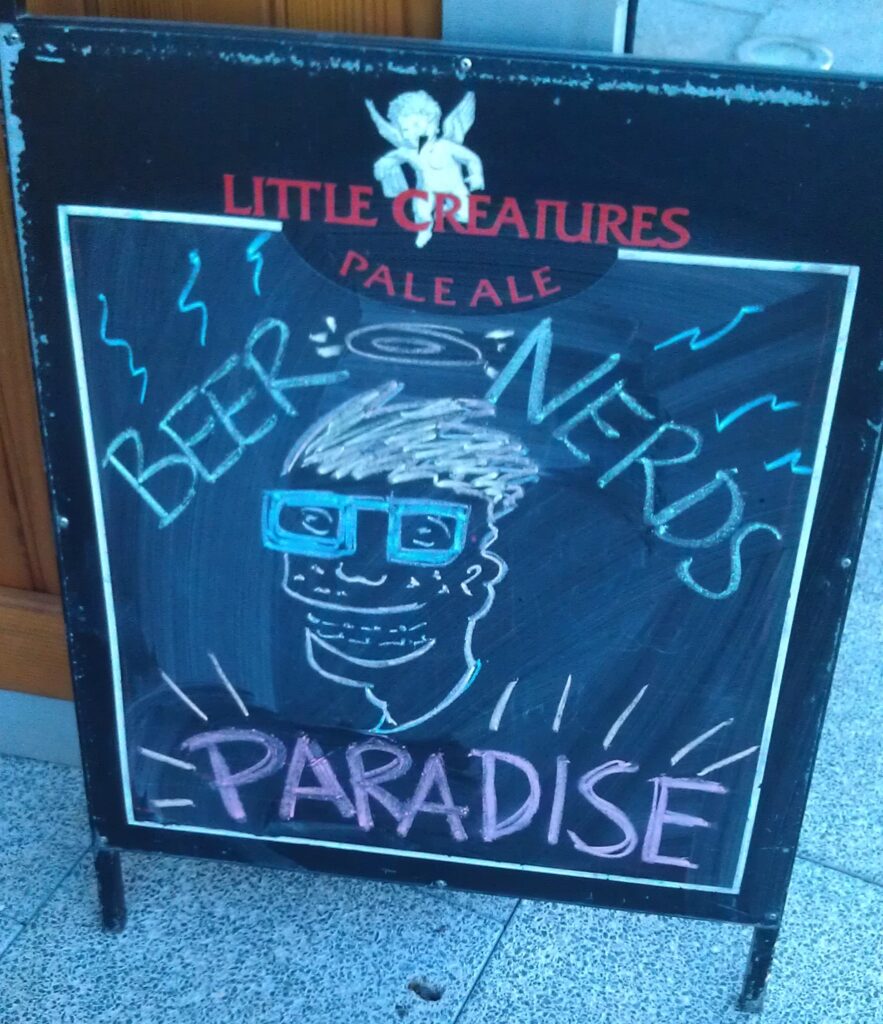
I found the Little Creatures brewery on Mews Road, facing the harbor where Australia won their first America’s Cup race. Blue skies and a gentle breeze filled felt good on a hot Australian day. I had been in Freemantle for two days, and had two days left before flying out to my first rig. Knowing that I couldn’t have any alcohol in my system to board the helicopter that would fly me out into the Indian Ocean off the western Australian coast, I decided I should enjoy one last beer before heading out to sea.

Finding a table on the outdoor patio, facing the sea, I ordered a pint and sat by myself, a stranger in a strange land. I overheard two local chatting about this and that. I knew they were locals because of their distinct ‘aussie’ accent. I listened for a bit, and then walked to the bar to order a second beer. On the way back to my table, I nodded to them and said hello.

“Hello mate.” One of the guys answered. Welcome to Freemantle.”

“Mind if I join you? I don’t know anyone here.” I asked.

“Come on over. We don’t get a lot of seppos here.”

I joined them for a beer or two. We had a great time making conversation about America, Western Australia and beer. More than once, I heard both guys refer to me as a seppo. I had no idea what they meant, but it didn’t bother me a bit – possibly because of the three beers – so I let it go. I was enjoying my last days in Freo. Two days later, I boarded a plane to the northern coast of Western Australia, followed by a helicopter, which took me out to the drilling rig, somewhere off Barrow Island.

The rig was my home for the next two weeks. Although I worked with many locals, I never asked what a seppo was or if I should be insulted by the term. A fortnight later, I left the rig the same way I got there; a helicopter ride to Barrow, a plane ride to Perth, and a taxi back to Freemantle. I was in my hotel by early afternoon. Time to head out to Little Creatures.

I found the brewery and ordered another beer. My two friends from my last time there were not around. I did find, however, three other locals sitting at a table outside. Once again, I took my beer outside, said hello, and asked to join them. Once again, they let me join.

“I was here a couple of week ago, sitting at this very table, talking with a couple of locals. They called me a seppo. Not once, but several times.”

One of the guys spoke up. “Well mate, that’s ‘cause you are a seppo.”

The other two guys laughed. I laughed with them, not knowing if I should be laughing or leaving.

“I’m pretty thick skinned.” I said. “I won’t be mad if you tell me what it means.”

Dave, the first one to talk, gave me a lesson on Australian vernacular.

“It’s like this mate. We call you a seppo ‘cause it rhymes with Yank.”

I was dumbfounded. “How does seppo rhyme with Yank?” I inquired.

“Dave responded. “Seppo is short for septic tank, which rhymes with Yank. And we call Americans that ‘cause you’re all full of shit.”

They waited for a response. I held up my glass and laughed, even harder.

“It’s not just you, mate.” Mike, one of the others added. “It’s all Americans. It goes back to World War II.”

“I’m not offended. In fact, I know several seppos back home.”

Four days later, after exploring much of the Freemantle and Perth area, I boarded a plane for Malaysia and a new rig. I was a proud seppo in a strange land.

A Hot Time with Jerry

Linda and I had a game we played. A fun game amongst two adults; a game that included our child. The game went like this.

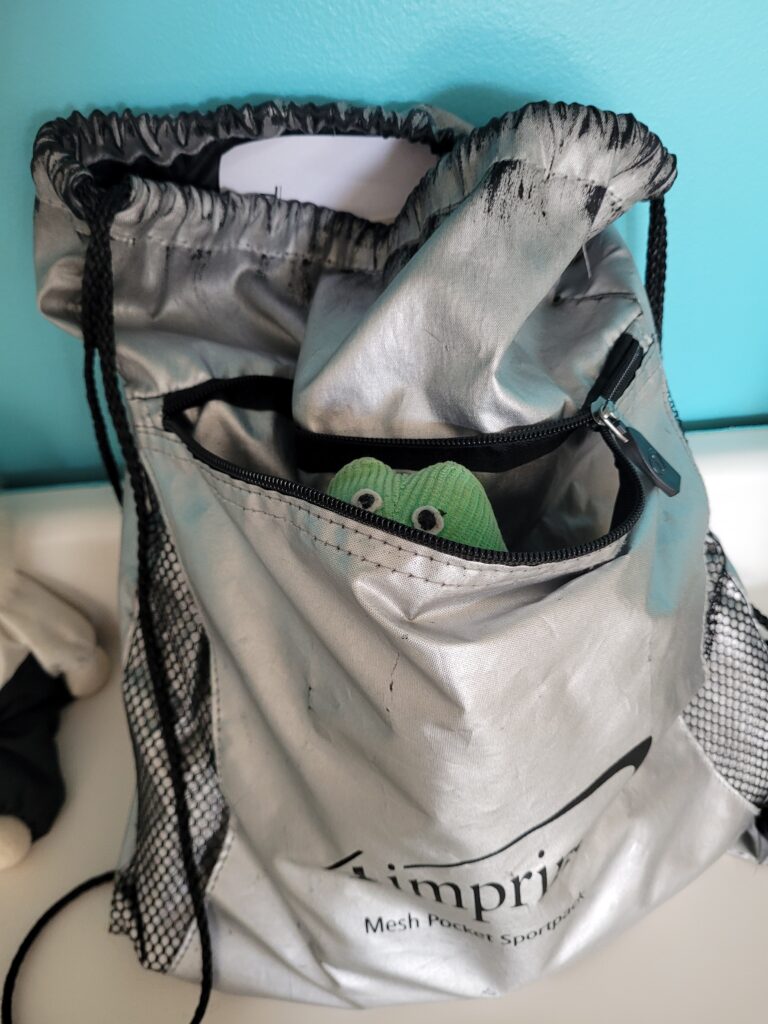
Our son’s name is Jerry. He’s not our real child, nor is he adopted. I bought and paid for him. Jerry is a frog. A small, green, stuffed frog. Small enough to sit on the dashboard of our car when we travel. Small enough to fit in Linda’s knapsack when we go hiking. Small enough to be hidden around the house by each other, from each other. That’s how the game started.

Linda and I have kids of our own, but none together. We have no pets. Jerry became our de-facto child and pet, all rolled up into one soft, squishy action figure. Jerry partook in many action-adventures. He never complained. He played along. He played by letting us hide him from each other.

The first time Jerry hid was when I strategically placed him in Linda’s side of the bedroom closet. Cleverly and delicately placed between two garments, one eye peeking from his hiding place, Jerry peered out, waiting for Linda to find him. It took almost four hours for Linda to find and rescue Jerry.

The second time, Linda hid Jerry from me. Jerry crouched behind a box of cereal in a kitchen cupboard. Unfortunately, my breakfast consisted of eggs and bacon for two days, and I didn’t rescue him until the third day. He was happy to be free from the cupboard and happier not to be poured into a bowl and eaten.

We continued this game for close to a year. Sometimes we found Jerry quickly. Other times, a week might go by with Jerry out-of-site. The game finally came to a stop on a Friday evening. Playtime was over.

Linda and I were going out for dinner and dancing. Before we left our house, I hid Jerry in the nightstand light on Linda’s side of the bed. We were heading to the door to leave when Linda remembered something in our room. She ran upstairs, turned on a light, grabbed a pair of gloves, and came back downstairs. We donned our coats and headed to the car. As we opened the door to exit, I stopped. I smelled smoke. It seemed to be coming from upstairs. We both ran upstairs and turned on the ceiling lamp, just in time to rescue Jerry. His two hind legs were sitting on the bulb in the nightstand light. A faint whiff of smoke floated from the lampshade. Jerry was on fire!

I grabbed Jerry by the neck. Linda turned off the nightstand light. She grabbed Jerry from my hands, ran into the bathroom, and submerged both feet in the sink. Other than two holes burned into the bottoms of his feet, he survived. We almost lost Jerry along with our home and everything we owned that evening.

Jerry does not play hide-and-seek any more. He sits in a chair in the living room, glad not to be a pawn in our silly games. Our silly games in time ceased.

Last Christmas I bought an Elf on the Shelf figure for Linda. Let the games begin.

The Beach

He grew up near Colby, Kansas. He worked on his family’s farm all of his young life, sowing, raising, and harvesting corn, never traveling far from the fields, never seeing what lay beyond the corn stalks and sunflowers that stretched forever in all directions. The farm was seventeen hundred miles from the Pacific Ocean; sixteen hundred to the Atlantic. He’d only seen images of beaches in stories he’d read in National Geographic. His one wish was to see a beach, if only just once.

His wish came true. In March of 1944, his eighteenth year, he received word from his uncle about an overseas job. He left the farm one cool spring morning. His first stop was North Carolina. He learned a new trade. Twelve weeks later, he left for England, a place he’d only read about as a boy.

He was not a boy anymore. He was a man. Ready to do man’s work. Soon after arriving in England, he boarded a boat. Ten hours later, the door of the boat opened. He saw his first beach.

We Hold the Power

I love you. I hate you.

Come sit at our table. Go back to where you came from.

Words are powerful.

You look beautiful tonight. Look what the cat dragged in.

We all have the power of words. More power though, depending upon who speaks them.

“We fight like hell. And if you don’t fight like hell, you’re not going to have a country anymore.”

“For the wages of sin is death; but the gift of God is eternal life . . . . “

Politicians often use lies – powerful words to those that believe them. Religious leaders use words of fear – other forms of power to rein in their flocks.

Give peace a chance. Let’s bomb them back to the Stone Age.

Words can be optimistic or terrifying. Soothing or painful. Soul warming or icy cold.

Sometimes, the most powerful words are those not spoken. I have defused many arguments with silence and a smile. Last weekend, my wife and I made a trip to Tucson. Because of my loathing for Interstate highways, I drove backroads. At one point, I steered our car down a muddy country road, surrounded by cotton fields. I knew we were not lost, but my wife disagreed. She didn’t say anything. She kept quiet and shot me ‘that look’. I understood. I turned left onto the first paved road, made our way to the Interstate, and arrived in Tucson on time.

Powerful words, indeed.

Eloy, Arizona