Author Archives: gabbyhayes

Clean Socks

I met a girl once. Her name was Renée. Back in 1981. She was my first wife. Not when I met her, of course. She was just a girl then. She was cute, funny, and outdoorsy. She was a hard worker and a decent cook. She also was a churchgoer.

I wasn’t a churchgoer. I wasn’t against church. I just didn’t go much. All the different flavors of religion were confusing to me. Some more than others. I knew that Baptists liked to soak people. I guessed that Methodists had some sort of method to their madness. I assumed that Quakers somehow quaked a bit. The church that Renée attended was Adventist, as in Seventh-Day Adventist. The Adventists church was quite confusing.

Back then, all that I knew about Adventists was that they couldn’t watch college football but they could watch professional football. I knew this since elementary school. I had a friend named Melvin, who was Adventist, and had to spend Saturdays in church instead of in front of a TV, watching USC or UCLA (I grew up in the suburbs of Los Angeles). He was different from my friend Danny, who was Mormon, and could watch college football but not professional football because he had to spend Sundays in church. Then there was my friend Martin (later to be called Eli), a Jewish kid who didn’t watch college of professional football, mainly because he just didn’t really like football.

Back to Renée. I decided I liked her, and in an attempt to woo her, I told her I would go to church with her. I also decided to learn as much as I could about Adventism. One day, before the upcoming Saturday, I drove into town and to the city library. I found the religious books section, gazed at the books on a shelf, and found a short book about western religions. It didn’t take long to find the section on Adventists: the religions were listed alphabetically and Adventism was near the front, between Abenaki and Anabaptist.

I found out several odd things about Adventists. First, they didn’t eat meat. My feeling was that, if God didn’t want us to eat meat, he wouldn’t have invented the steak knife. Second, they didn’t drink coffee. I wondered how people were supposed to sit through three hours of church service on Saturday mornings without coffee to keep them awake. Third, they didn’t drink alcohol. That was quite confusing. Apparently, they could watch football on Sunday but couldn’t drink beer while watching. How un-American.

One thing I found out though wasn’t so bad. One of the early converts of the Adventist church was John Harvey Kellogg. He bought into the ‘eating no meat’ idea and invented breakfast cereals. As a child, I spent Saturday mornings watching cartoons and eating Frosted Flakes® (instead of sitting in church for three hours, wishing I drank coffee). I liked John Harvey Kellogg.

Overall, the Seventh-Day Adventist religion seemed pretty weird, but it didn’t change my mind about attending the following Saturday. I let Renée know by telling her sister, whom I worked with at a nearby restaurant. I couldn’t call Renée because I didn’t have a telephone. I lived in a remote farm in the mountains of North Idaho and didn’t have many of the luxuries of modern living, such as a phone, a television, and often times during the winter, running water. Through Renée’s sister, plans were set. I’d pick up Renée at her house in Hope, attend church, and hopefully, take her out afterwards for tea and cookies (both safe bets).

Friday night arrived. I grabbed my best clothes from my closet (living on a farm and working in a restaurant, I didn’t have much need for nice clothes) and made sure they were pressed by placing them between my mattress and box spring. I found a pair of decent-looking boots and spit-shined them (my past military experience finally paid off). I was ready for the morning.

Saturday morning came early. I took care of the three S’s (shit, shower and shave – more from my military days), donned my go-to-church clothes, grabbed a pair of socks from the hamper (no one would see my socks, especially in winter), and laced up my boots. Off to Hope to pick up Renée and drive into Clark Fork, home of the small church.

Several elders greeted us in front of the church. By elders, I mean old people. Renée and I, both in our twenties, were the outliers. The average age of most of the other parishioners was around Jurassic. The scene was straight out of the Old Testament. Some of the people in the pews might have actually been around in the Old Testament. They seemed nice though and welcomed me as a newcomer. Not knowing what to expect, I followed Renée into the nave and found seats in a pew near the back.

We sat there for about thirty minutes waiting for the service to begin. I was glad I wasn’t an Adventist yet and relied on the three cups of coffee I had that morning to keep me awake. Finally, the pastor arrived. We all stood. He welcomed the congregation, we sang a few songs, and then we sat and listed to his sermon. He spoke of Jesus, the second coming, and our need to ask for forgiveness through communion.

I was familiar with communion. I’d seen it once or twice in Catholic Church as a kid. I never went through First Eucharist, otherwise known as First Communion, thus I never got to wander up to the alter to eat the wafer and drink the wine. I did, however, know what was involved. What I didn’t know was how the Adventists practiced communion. I soon found out.

Near the end of the sermon, the pastor said it was time for communion. On cue, everyone in the pews stood at once. I stood up next to Renée. The entire congregation filed out of the nave. Women walked one direction toward the foyer. The men wandered off toward the lunchroom. I watched as Renée left my side and followed the other women. I didn’t know a soul in the building except her, but reluctantly followed the throng of men. Elders herded us into an auxiliary building behind the church. I approached the door and met the pastor. He greeted me with an outstretched hand and a smile on his face.

“Welcome, brother. You must be the new person.”

I shook his hand and replied. “We sir. First time here. First time in an Adventist church, to be honest.”

Still smiling, he looked me over, peered deeply into my eyes, and said, “I’d like to wash your feet.”

I was confused, and a little (okay, a lot) creeped out by his request. He looked serious. “Excuse me?” I responded.

“Just as Jesus washed the feet of Peter and Judas, we partake in the practice of washing away sins by washing feet. And I’d like to wash yours, brother.”

He really wanted to wash my feet. I said yes. We found a vacant chair. He instructed me to remove my shoes and socks. I did. First off was my spit-shined boots. After that, the pair of socks I grabbed from my hamper. The dirtiest, smelliest, holiest (as in full of holes) pair of socks I owned. The pair no one would see.

He saw them. I could tell that he smelled them too from the way his smile disappeared. I think every brother in the lunchroom also smelled them. The pastor muttered something about cleanliness being close to Godliness as he quickly washed my feet. He finished and I hurriedly put on my socks and shoes. I thought I was done with the ordeal. Not quite. His smile was now a bit of a grimace. I stood up and started for the door. He looked once more into my eyes and said, “Now it’s time for you to wash my feet.”

He was serious. He sat and removed his perfectly shined loafers and matching, clean socks. I humbly knelt at his feet, grabbed a sponge from the bucket of water, and washed his feet.

On our way to get tea and cookies, Renée explained what happened.

“Adventists perform communion every thirteen weeks.” she said.

“Why thirteen?” I asked her.

“It has something to do with testing, suffering, and rebirth, I think. I’m confused too on that one.”

Later that evening, when I got home, I grabbed my wall calendar and leafed through the months. On every thirteenth Saturday, I penciled in “Wear clean socks.”
Farewell Me Friends

This is from a writing prompt that was assigned to our writing group in Mesa, Arizona. The prompt was “When I die, I want . . . .” When I heard the prompt, I instantly thought of an old, bad Irish joke –

Q. What’s the difference between an Irish funeral and in Irish wedding?
A. One less drunk.

I wrote this Limerick.


Dying I do not fear.
Someday it will be here.
I’ll laugh at my death.
As I take a last breath.
So please don’t shed me a tear.

I’ve waited my life for this day.
When my body would just fade away.
Now what would I wish.
Since I’ve reached the finish.
Here are the words that I’d say.

I’ll start with a pint of stout.
Pour me a whiskey I’d shout.
I’ll drink till I smile.
It might take a while.
It’ll be Heaven, no doubt.

I’d wish for me friends to be near.
All of them hoisting a beer.
They’d offer a toast.
To their newly dead host.
And all would be in good cheer.

My family would be by my side.
Their anguish I pray that they hide.
I’d hope they don’t cry.
When they tell me goodbye.
Cause it’s been one Hell of a ride.

I hope that wherever I go.
There’s lot of sun and no snow.
I’ll lounge all the day.
In my beach chair I’d lay.
Until my tanned skin would glow.

These are the things I’d want most.
When I die and become a ghost.
So please grab a glass.
Every laddie and lass.
And to me, drink a last toast.

Three Keys

Beatrice died a rich woman. Through wise investments and not giving in to her children’s demands, she had accumulated a fortune. Her three estranged children knew that their mother had money, which they wanted.

Beatrice’s children gathered for the reading of the will, in the office of Beatrice’s lawyer. They were sitting around an oak table when Mr. Lawton appeared, carrying an old wooden box. A brass keyhole adorned the front and tarnished handles were on both sides of its lid.

The lawyer also carried three skeleton keys, and an envelope containing Beatrice’s last instructions. The keys looked similar except for the bits that protruded from the end. Different bits meant only one might open the box. Mr. Lawton opened the envelope and read the instructions.

“To my children: Whomever opens this box will inherit my money. However; if none of you open the box, my money goes to a charity of my choosing.”

Mr. Lawton distributed the keys. Yancy, Meredith, William grabbed their keys and held them with anticipation of newly found riches. Yancy, the first-born child, went first. “I am the oldest. Surely, the money is mine. Don’t worry. I will share what I think you both deserve.”

He inserted his key into the lock and twisted it to the left and to the right. The lock didn’t open.

“Step away.” Meredith said, as she brushed her brother to the side. “Mother adored having a daughter. We spent hours partaking in things only mothers and daughters could. When I open the box, I will consider sharing a portion with my brothers.”

Meredith went through the motions with the key. She forced the key right and then left. The lock wouldn’t open. With a sigh of frustration, she sat down, waiting for William to open the box, hoping that he will share generously.

“Mother always had a special love for me. As the youngest, I was closest to her heart. I’m sure she wanted me to inherit her money.”

William gently moved the key to the right. He then turned the key to the left. Once more, the lock didn’t open. With anger in his eyes, he threw the key onto the table and yelled. “What was mother thinking? She had three loving children who cared for her, even though we didn’t see much of her these past several years. Now she has left us out of her will.”

“How could she?” cried Meredith. How shall I raise my family without the money I deserve?

“Now all will be lost to some charity.” Yancy replied. “This is no way for her to show us the love we showed her.”

The reading was over. The three angry children grabbed their coats and left. On the table sat the useless key. As soon as they were gone, Mr. Lawton sat down in front of the box. He held the handles and opened the lid. He reached in and extracted a piece of paper. It contained the name of Beatrice’s favorite charity.

The Anneversary

Four in the morning was much too early for Michael to rise, but he couldn’t sleep. He had been restless when he went to bed the night before, and sleep didn’t come easily for him. Rather than staying in bed, he stood up and, in a semiconscious state, ambled to the kitchen. He made a cup of coffee and moved to the dining room. In the darkness of the early morning, he drank his coffee while thinking about the events of the past two years.

“You’re up early.”

Michael looked up and saw Laura, his wife, sitting on the couch in the adjacent living room. Michael grabbed his coffee, walked toward her, and sat on the couch a few feet away.

“Couldn’t sleep. Lots on my mind. You know what a lousy couple of years it’s been.”

“At least you have your health.” she joked.

“Sometimes I wish I didn’t. Just fade away. Be with my loved ones.”

“Don’t talk like that!” she demanded. “You have too much to live for. You scare me sometimes.”

“I know. I’m sorry. The kids are young and needy. My boss is old and needy. This house is somewhere in between and always in need of something.”

Laura sat for a minute, looking into Michael’s sad eyes. She replied “And don’t forget me. I’ll always need you.”

“Thanks. I’ll never forget you. You know that.”

“Today’s our anniversary. I know you remember that.” she added. “It’s been two years.”

“Yes, I know. I still wish I could have been with you that night. Things would be different now. A lot different. I shouldn’t have let you go to the party without me.”

“You can’t change the past, honey. Just the future.” She paused again for a minute, and then said, “You look tired. Go back to bed.”

Michael stood up and walked toward the bedroom. He turned to watch Laura, mesmerized by her beauty. Between yawns, he replied, “I’ll see you soon. I love you.”

Michael climbed in bed, and in a few seconds, he was fast asleep.

The Road from Wrightstown

Highway 670, better known by the locals as Saylor’s Pond Road, was busy at ten in the morning. Cars and trucks, many going to-and-from the Air Force base, passed by me as I stood on the south side of the two-lane road. Gazing west, I saw a mile of blacktop, fading into the fields of New Jersey. If I could have gazed farther down the road, past the farms and small towns and rivers, I might have seen my eventual destination, three thousand miles away.

An hour before, sometime just past nine, I signed my name on a legal document, saluted one more officer, and became a free man – a civilian once again. When I scribbled my name on the discharge papers, I became, for the first time in my life, a man on my own. No longer did I have parents to raise me, nor the military to feed me. From here on, at least until I figured out what I would do with my life, I had no one to answer to except myself.

It was a surreal moment in my life, although it didn’t feel like one. As I stood on the side of the road, thumb stretched into the air, all I thought about was when the first ride might come, how far it would take me, and where I would sleep that night. My sleeping arrangements, a faded yellow sleeping bag and an old, worn foam pad, were strapped to the top of my vintage canvas backpack. I purchased the pack in haste in Germany, a month before leaving my last duty station. The sleeping bag was one of the few things I had from my youth, used often as I hiked and hitchhiked around California as a kid. The pad was given to my from a German friend who thought I might want a little cushion between the hard ground and me. Clothes, a small cook stove, a coffee pot, a mess kit, and a new Swiss Army knife rounded out my gear. My entire life fit on my back, hauled between cars as I made my way across the country.

Three thousand miles to go. Then what? I didn’t realize it then, but life changed drastically. I was a person without a life. I had no home, although I wasn’t homeless. I was alone, but I wasn’t lonely. I had no job, but I wasn’t unemployed. I had an entire county to pass through, and as long as the five-hundred dollars in my wallet lasted, I could go anywhere, as long as it was in a southwesterly direction.

Three thousand miles to go. Why was I going home? I had no home. My parents were gone, making me an orphan before my sixteenth birthday. My sisters were gone, both moved away and in bad marriages. A few old friends were still back home, but after four years of traveling the world, serving my country, and growing up without them, would we have anything in common?

Three thousand miles to go. How long would I stay there? Maybe I could go to college. I had the G.I Bill at my disposal. Maybe I could get my job back at the small diner where I learned how to cook. Maybe I’d meet a girl, get married, settle down, and raise a family. Or maybe I’d get bored with the thought of responsibility and move on somewhere else, anywhere but there.

It took less than twenty minutes for me to flag down my first ride. A red sedan with out-of-state plates pulled off the road, a hundred feet in front of me. I grabbed my pack and ran to the open passenger side window. The driver, a middle-aged man wearing dusty coveralls, a Penn State hat, and cracked, brown boots looked up and asked “Where you headed, son?”

I smiled and said “California. About three thousand miles down the road.”

“I’m going as far as Pennsylvania.” he replied.

“That’ll do just fine.”

I threw my pack into the backseat and climbed into the front. A mile down the road, I quietly said to myself, “Two-thousand, nine-hundred, and ninety-nine miles to go.”

Kicking the Bucket List

The great fifth-century Chinese philosopher, Sun Tzu, once said Life is full of goals, so make a bucket list. Or maybe it was Sonny Bono. I can’t remember which, but I read it on the Internet, so it must be true. At any rate, when I read the quote, late one afternoon, I instantly thought it was the most profound thing I had ever read. Or maybe I was reading a recipe for marinated salmon with basil and mint.

Later that evening, after dinner – the salmon was delicious – I pondered the idea of bucket lists. What are they? Do they define your life’s goals? Do they organize your every waking moments? Can you get one at the Home Depot? I pondered the idea because I had never put much thought into what I wanted to accomplish before I die. That’s because I was busy having too much fun living. I didn’t want to spoil it all by dying. Thus, I never created a list of things to do before meeting the Grim Reaper.

Here’s another thing to consider. What happens if you get the end of a bucket list? No more things to do before dying? Is it time to call it quits? Can you add more things to the list and, hopefully, prolong your time here on Earth? Is that cheating death? Will you be living on borrowed time?

Many people I know have created bucket lists for themselves. They list places to go, people to see, things to try, and so forth. I never did. For some reason, a bucket list sounded too much like work. “Let’s see, Paris is on my list. I’m here. Bonjour. Now what? I guess I’ll head to Fiji.” I wouldn’t want to put more emphasis on finishing the list than I would on enjoying the things on the list.

I am getting older now (actually, I have been getting older since May of 1957). Is it time to create a bucket list? Maybe I will. It will be late but at least I’ll have something in which to look forward. As far as what to add to my list: I think I’ll only write down one item . . .

Keep living.

The Deluge

“Damn rain.”

Wilbur gazed out of the windshield of his old Ford F100 pickup. Homer sat in the passenger seat, finishing his third box of Cracker Jack. He replied to Wilbur’s forlorn comment.

“What we gonna do, Wilbur? Sure is pretty wet and muddy.”

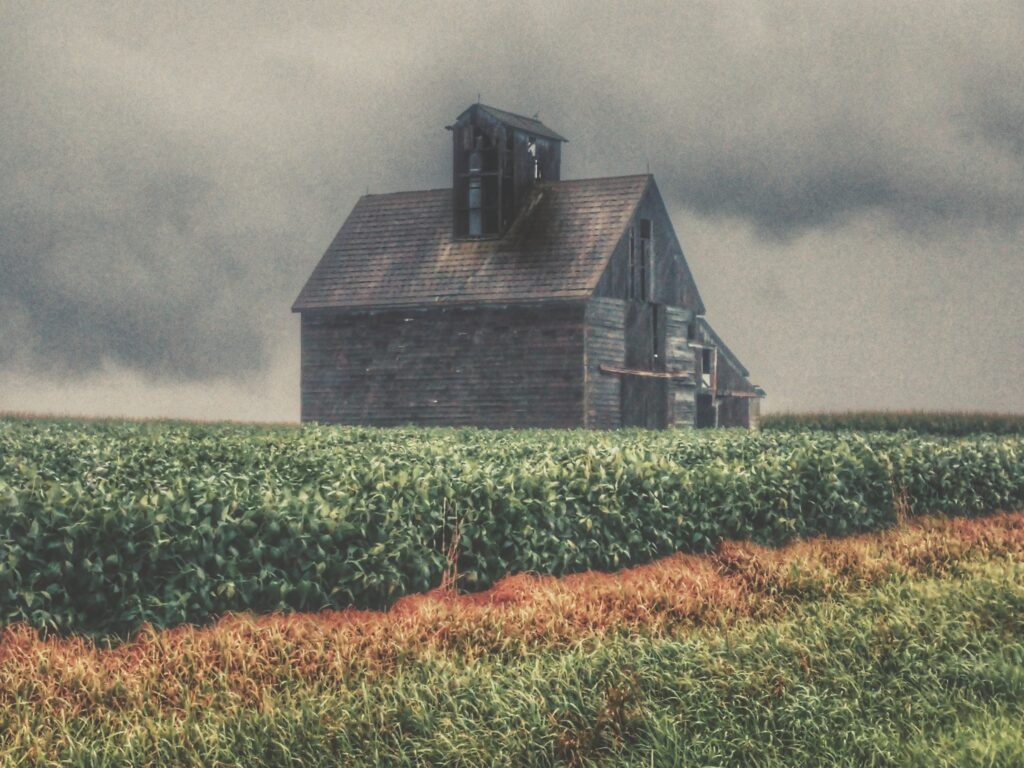
They both stared down the road toward the corncrib that sat along the old highway into Havana, Illinois. The rains hadn’t let up for two weeks, with no end in sight.

Homer opened the side window and spit a wad of chew onto the shoulder. “Ain’t seen rain like this since that awful April we spent in Korea. Harvest ain’t looking too good.”

The fields were a quagmire of mud and weeds and drowned rats. Rivulets of dank brown water flowed around the crib and the grey sky appeared opaque from the ongoing deluge. The harvest was indeed in trouble.

“What are we gonna do?” Homer asked while looking at the surrounding acres of close-to-mature corn stalks.

“Ain’t much we can do? Can’t get our combines in the fields. They’d stick to the mud like gnats on flypaper. And even if we could harvest the corn, it would surely turn rotten in that old corncrib. That thing has more holes in it than a politician’s alibi.”

Homer again looked out at the fields. “If we can get it picked and if we do, we can’t store it, we’re kind of fu . . . “.

“Watch your language, Homer. It’s Sunday, you know.” Wilber interjected.

“So now what?” Homer asked one more time.

Wilber had a look of sorrow on his face. “Think I’ll go to Arizona for a spell. Don’t never rain down there. In a few weeks, the rain will stop and we can plow the fields over and hope for a better crop next year.”

Wilber took one more look at the fields, spit one more long draw of tobacco out the window, started the old truck, and pulled onto the highway. He shook his head and mumbled quietly.

“Damn rain.”


Ain’t My Leaves

“Those leaves are on your side.”

“They ain’t my leaves”

“If they’re on your side, then they’re yours.”

“Hogwash!”

Barney Hemsworth stood on the edge of his property, staring down his obnoxious neighbor, Riley Ridder. Barney was holding a leaf rake, wishing it were perhaps a baseball bat, or worse, a twenty-two. Hovering a few feet away, on the edge of his property, with his hands in the pockets of his Levi coveralls, Riley gawked at Barney. Riley was ready for a fight and Barney would be his opponent.

Barney had ire in his voice as he directed his voice toward Riley. “We go through this every damned year. If the leaves are on your property, you got to rake them up.”

Riley responded. “Those leaves fell off of your tree. Those are oak leaves and I ain’t got no oak trees. You got lots of oak trees, which makes those leaves yours. Now, get to raking before I call the authorities.”

“They’re only my leaves while they’re on the trees. Once they take flight, they belong to whose ever property they fall in. And that would be yours. You’d be wise to pull your lazy hands out of your pockets, fetch a rake, and start raking.”

Riley was getting hot under the collar. “It’s your lazy ass that sits around and waits for the wind to whoop up and blow the leaves my way. If you’d get busy when the leaves drop instead of watching Wheel of Fortune reruns all day, them leaves would be bagged up and ready for the landfill.”

Barney and Riley had lived next to each other for over thirty years. For twenty-nine of those years, they argued about whose responsibility it was to rake. The only year they didn’t argue was back in eighty-seven when the Hemsworths spent three months in Portugal and Riley had both knees replaced. That fall, leaves remained on the ground. Surprisingly, none of the other neighbors complained.

Arguments always sounded the same. Either Barney or Riley would accuse the other of not taking responsibility for his leaves, while the other would blame the first for waiting for favorable winds to blow the leaves onto his property. Eventually, either Blanche Hemsworth or Randi Ridder would give their respective husband an earful, and either Barney of Riley would reluctantly rake the leaves. Throughout the following winter, whomever raked the leaves never heard the end of the ridiculing from the one who didn’t rake.

Barney replied to Riley’s last comment. “You ever read that book Where the Sidewalk Ends by Shel Silverstein?”

“No, but I heard of it.” Riley answered.

“Well this is where my sidewalk ends, and all them leaves are over there.” Barney yelled, pointing toward Riley’s property. “Start raking, you lazy sack of sycamore stipule.”

Riley stood there for a moment. In twenty-nine years, he’d never been called a sack of sycamore stipule. He didn’t even know what stipule was. What he did know is that he wasn’t going to stand around taking abuse from Barney. “Don’t go nowhere you big ugly bag of birch bark.” Riley demanded, thinking he’d bested Barney’s blasphemous retort.

Riley ran to his garage and quickly returned with a leaf blower and several extension cords. “Just give me a minute and I’ll send all these leaves back onto your land where they belong.”

“Don’t make me get out my gas-powered blower. It’ll blow all the leaves back and blow you over at the same time.”

Barney and Riley stood there, holding their instruments of battle, waiting for the next person to comment. Just then, a strong gale came from the north. It was strong enough to blow the rake out of Barney’s hands, the blower and extension cords out of Riley’s hands, and both of their John Deere hats down the block. Within minutes, the leaves were half way down the street.

Riley looked up and smiled. “Well, how do you like that? The leaves are gone.”

Barney replied. “That was one Hell of a gust. Them leaves are all the way down in Gus Meyer’s yard.”

“Ain’t our problem anymore. See you later, Barney.”

“Think I’ll watch Jeopardy for a spell. Good talking with you Riley. Say hello to the Randi.

Barney went into his house and turned on the TV. Riley went into his house to see if he had a copy of Where the Sidewalk Ends. Thirty minutes later, they both looked out of their windows and saw Gus Meyer walking their way, holding two John Deere hats and a baseball bat.

Mt Evans, Colorado

August 2021

Another day . . . another road trip. With a holiday day to take advantage of, Linda and I decided to explore more of Colorado. We decided to drive the highest paved road in North America. Off to Mt. Evans we went.

Mt Evans is a ’14er’ – one of Colorado’s 58 mountains over fourteen thousand feet high. At 14,262 feet above sea level, it is the 18th highest peak in the state. It’s also the closest to our home in Westminster. The road up to the peak starts near Echo Lake Park, on Colorado Highway 103. We found out after leaving Interstate 70 at Idaho Springs that we needed a reservation to drive to the top. We didn’t have one but inquired at the ranger shack if we could just drive up. We could – if we didn’t stop the car. No getting out to make photographs or even to use the bathrooms. We thanked the nice young ranger and drove to the top – without stopping – no photographs and no pit stops.

Driving up to the peak.

The first half of the drive is beautiful. We drove through conifer stands with views of mountains and valleys in all directions. Once we hit treeline – somewhere around 11,500 feet, the surrounding beauty diminished. We were now surrounded by rocks and more rocks, and no trees. The road was narrow and at times Linda had to ask me to put my coffee cup in its holder and place both hands on the wheel.

On the way down, we picked up three hitchhikers. A girl from Arvada was with her brother and his friend (both from Texas). They had parked at Summit Lake and hiked to the peak and then realized they were too tired to hike back. Since they did have a reservation, we stopped a few times to make photographs and use the facilities.

We made it to the bottom of Highway 5 and back onto Highway 103, driving toward Evergreen. We stopped for a picnic near Beaverdam Creek before driving north and east into Evergreen.

Picnic time.
Hiking near Beaverdam Creek.

Not ready to go home, we hiked for a few hours in Elk Meadow Park, grabbed a beer at the Lariat Lodge Brewing Company, and then made our way home, passing through Golden. We arrived home by 6:00, tired and hungry, with another Colorado destination under our belts.

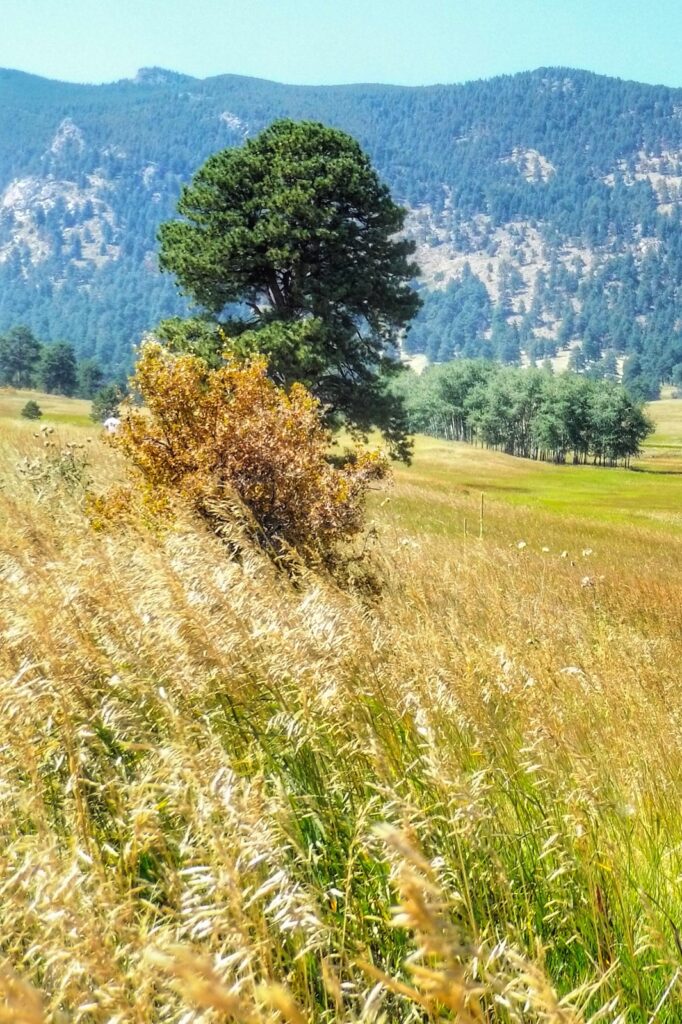
Elk Meadow Park.

McCoy, Colorado

August 2021

I am writing my second book of tall tales and adventure. The book will be similar to The Rats of Plainville: Tales from the Heartland, only the new stories will take place in the Rocky Mountains. The first story is in editing and takes place in the small town of McCoy, Colorado. This past Sunday, I decided to visit McCoy.

Welcome to McCoy.

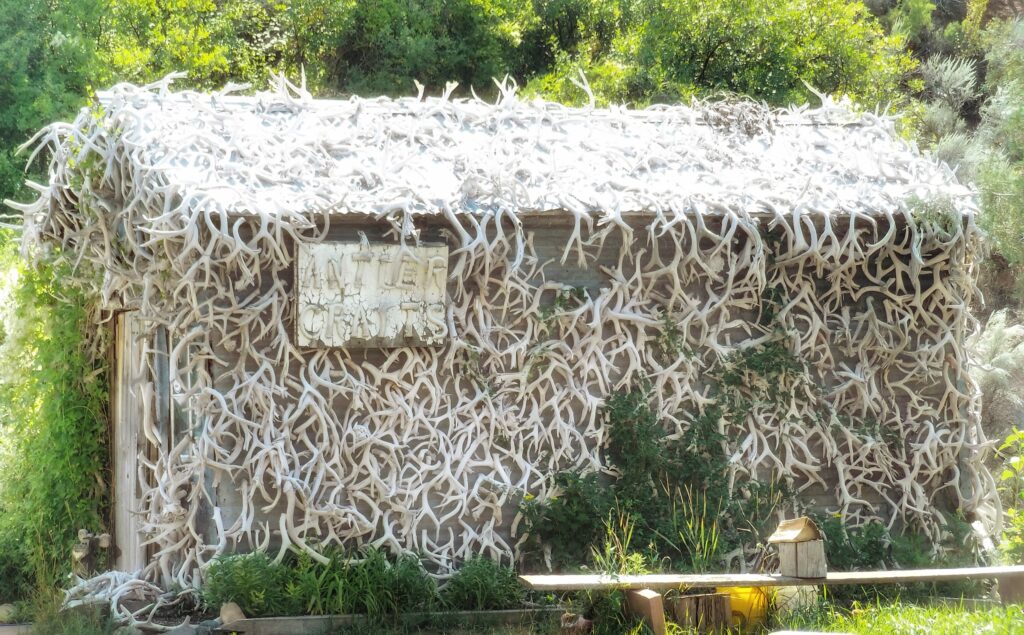
As the story explains, McCoy is a small town. Very small. Wikipedia says there were 43 people living there in 2019. When I drove through, I saw exactly zero people. Maybe they were all worshiping in the McCoy Community Church. Or perhaps they were engaged in the making of antler art. Whatever the reason, as I drove through town and into the surrounding hills, I met not a soul.

Get your Antler Art . . .

The drive out was nice, once I jumped off of Interstate 70 near Wolcott. I-70 can be tiresome and way too busy for my liking. I didn’t experience too much traffic heading west though. Once on Colorado State Highway 131, the number of passing cars thinned. Between McCoy and Toponas, I saw maybe five cars total. And once I turned east on Highway 134, I encountered more cattle than people.

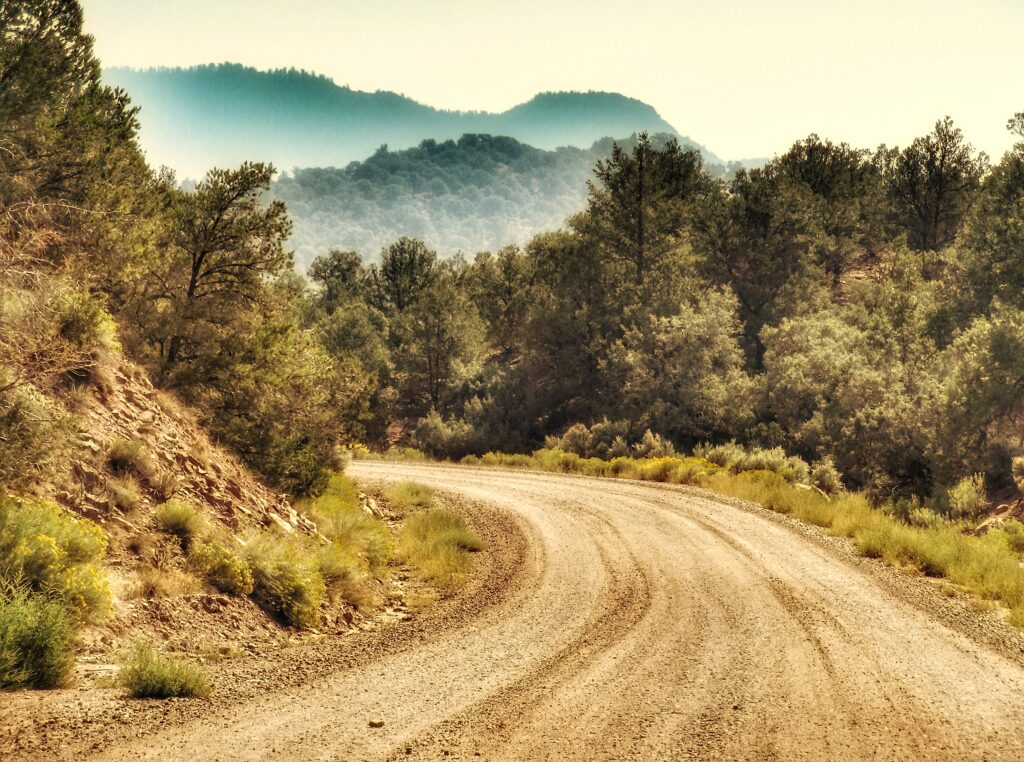
A County Road outside of McCoy.

Rural roads in Colorado are wonderful. Highway 134 travels through the Routt National Forest. I passed through thickets of pine trees and by small streams and rivers. They eventually flow into the Colorado River; the waters making the long journey from Grand County, Colorado to the Gulf of California.

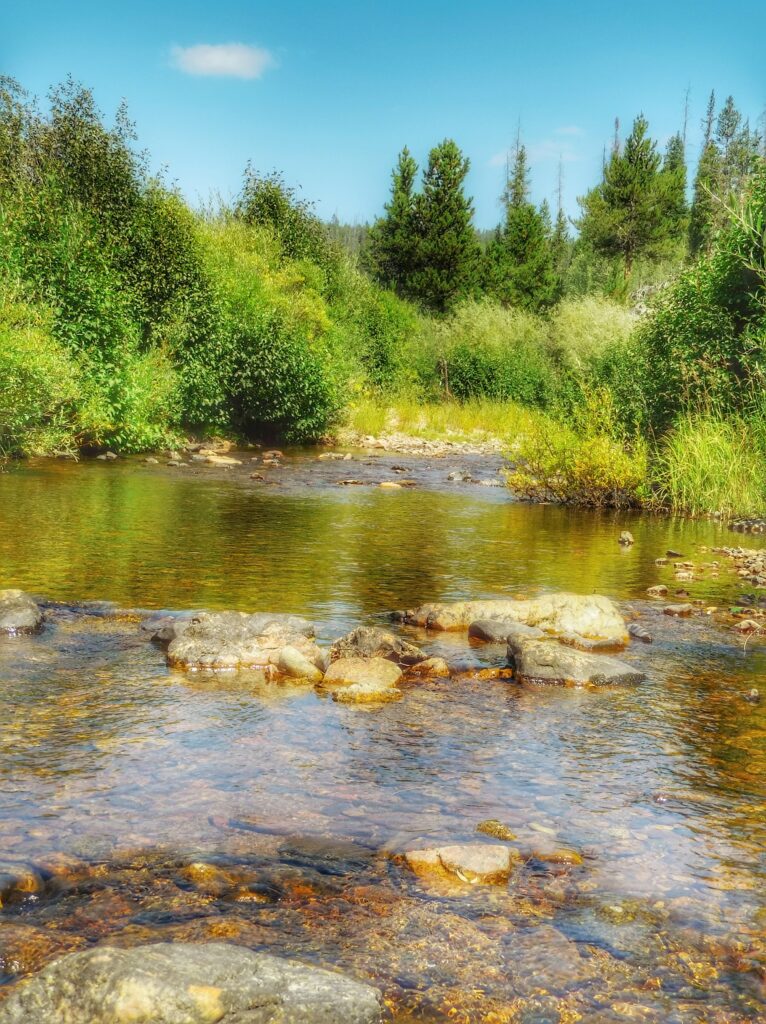
Rock Creek.

Highway 134 eventually dead-ends at US Highway 40, near Wolford Mountain Reservoir. I drove south and east on Highway 40 past Kremmling and Granby into Fraser. To my delight, there were two good breweries in Fraser; the Fraser River Beer Company and Camber Brewing Company. I didn’t have my best brewery adventure buddy with me (Linda was visiting her daughter in Michigan), however, I decided to give them a try. I was not disappointed.

Fraser River Beer Company.

I eventually finished the day, driving south on Highway 40 through Winter Park. I merged back onto I-70, and hit terrible traffic back into Denver. Not liking the flow, I exited onto US Highway 6 into Golden, up Coloroda Highway 93, and made it home in the afternoon.

Somewhere along Highway 134.